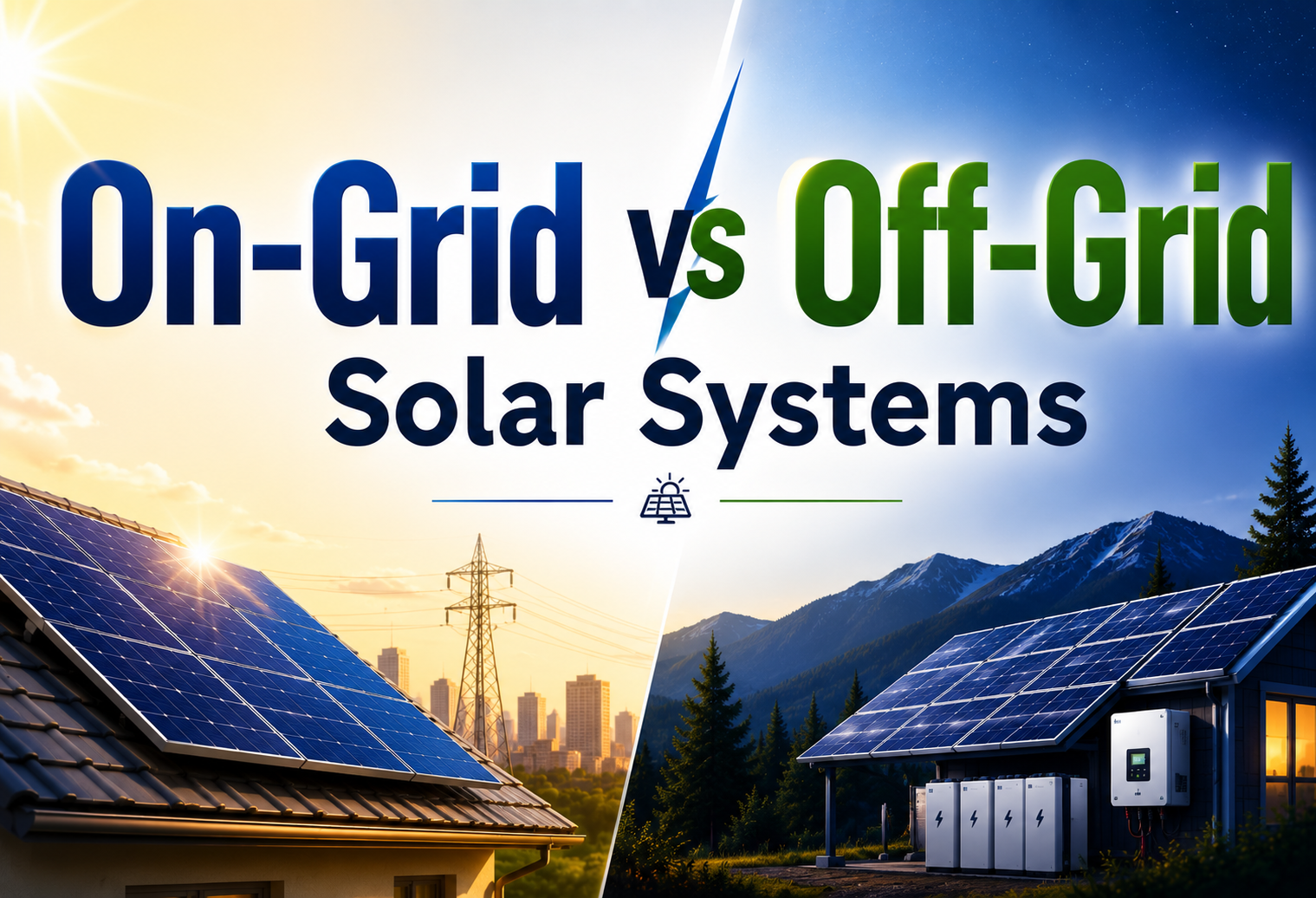
On-Grid vs Off-Grid Solar Systems
Choosing between an on-grid and off-grid solar system is an important decision for homeowners planning to switch to solar energy. Both systems use solar panels to generate electricity, but they differ significantly in how the electricity is used, stored, and supplied to the home. An on-grid system is connected to the electricity distribution network, allowing the home to use solar power when it is available and draw electricity from the grid when required. An off-grid system operates independently of the utility grid and normally requires battery storage to provide electricity when solar generation is unavailable. The right option depends on the property's location, electricity requirements, grid availability, budget, and the homeowner's energy goals.
An on-grid solar system, also known as a grid-connected rooftop solar system, is generally suitable for homes that already have a reliable electricity connection. During the daytime, the solar panels generate electricity that can be consumed directly by household appliances. If the solar system produces more electricity than the home needs, the excess can be exported to the electricity grid under the applicable metering arrangement. When solar generation is insufficient, such as at night or during periods of low sunlight, electricity can be drawn from the grid. Under net metering, the bi-directional meter records electricity imported from and exported to the grid, and the consumer is billed based on the applicable net energy consumption.
One of the biggest advantages of an on-grid system is its lower dependence on battery storage. Since the electricity grid effectively provides backup when solar generation is insufficient, homeowners do not necessarily need a large battery bank. This can reduce the initial installation cost and simplify system maintenance. On-grid solar can also be particularly attractive for households with daytime electricity consumption because the electricity generated by the panels can be used directly instead of being stored. However, an important limitation is that a conventional grid-connected solar system generally shuts down when the utility grid fails, even if sunlight is available, because of electrical safety requirements. A battery-backed or hybrid system is required when backup power during grid outages is a priority.
Another benefit of on-grid solar is the potential to reduce electricity bills through self-consumption and applicable export or net-metering arrangements. The official rooftop-solar FAQ explains that under net metering, excess solar electricity can be exported to the grid and electricity can be imported when solar generation is insufficient. The final bill depends on the applicable state regulations and billing arrangement, and homeowners may still have fixed or other charges even when solar generation offsets most of their energy consumption.
The choice between the two systems also depends on the homeowner's electricity usage pattern. A household that has a stable grid connection and wants to reduce monthly electricity costs may find an on-grid system more practical and economical. A property located in an area without reliable grid access may benefit more from an off-grid system. Homes that have a reliable grid connection but want solar generation together with backup power can also consider a hybrid solar system, which combines grid connectivity, solar panels, and battery storage. The appropriate configuration should be selected after evaluating the home's actual electricity consumption rather than simply choosing the largest possible solar system.
Ultimately, there is no single solar configuration that is best for every Indian home. On-grid solar is generally a strong choice for homes with reliable grid electricity that want to reduce electricity bills without the added cost of large battery storage, while off-grid solar can be a better solution for properties that need independent power where grid electricity is unavailable or unreliable. A hybrid system may be appropriate for homeowners who want both grid connectivity and battery backup. Before making a decision, homeowners should assess their electricity consumption, roof space, sunlight availability, grid reliability, future energy requirements, budget, applicable subsidies, and local DISCOM regulations. A professional solar assessment can then help determine the right system capacity, equipment, battery requirements, and expected long-term savings.

