On this page
- Sizing from one bill
- Skipping the site survey
- Choosing on the price per kW alone
- Losing the subsidy before you start
- A structure that is too low or too weak
- Picking the wrong inverter
- Cutting corners on earthing and wiring
- No plan for cleaning
- Leaving without the paperwork
- Waiting too long
- How we help
- Questions people ask
A rooftop solar system should run for 25 years, and most of what decides whether it does is settled before anyone climbs onto the roof. The mistakes we see most often aren't technical. They're choices made in a hurry: a system sized from one bill, a quote picked on price alone, a roof nobody looked at properly. Here are the ten we come across most, and how to avoid each one.
- The system can't be bigger than
- the sanctioned load on your bill
- For the subsidy, panels must be
- made in India, with Indian cells
- Vendor maintenance
- 5 years from commissioning
- Scheme approved until
- 31 March 2027
1. Sizing from one bill
Your use changes through the year. A summer bill with the air conditioners running can be twice a winter one. Size the system from a single bill and you get it wrong: too small, and your bill stays in a high slab; too big, and many units go to the grid at a low rate.
Instead, add up the units on your last twelve bills and divide by twelve. Allow about 120 units a month for each kilowatt of panels. Our guide to what solar saves on your bill walks through it, and our system size estimate gives a quick suggestion.
If you expect your use to grow, with an electric car, another air conditioner or a family member moving in, say so now. It's easier to plan for it than to add to the system later.
2. Skipping the site survey
A quote given over the phone can't see your roof. A proper survey checks the things that decide how well the system works and how long the roof lasts under it:
- Shade from water tanks, parapets, trees and taller buildings next door, at different times of day. Even part of a panel in shade can pull down the output of others.
- Which way the roof faces, and how much usable space it has once tanks, stairs and access paths are left clear.
- The condition of the roof. If it needs waterproofing or repair, do it before the panels go up, not after.
- Where the inverter and cables will go, and how far they run to your meter.
If an installer won't visit before quoting, treat the quote as a guess.
3. Choosing on the price per kW alone
Two quotes for "3 kW" can describe very different systems. A low price per kW often comes from what's left out, or swapped for something cheaper. Before you compare prices, check that each quote names:
- the panel make and model, not just "Tier 1 panels"
- the inverter make, model and capacity
- the structure: its height, and whether it's hot-dip galvanised steel
- earthing and lightning protection
- the cables, the distribution boxes and the net-meter charges
- what the five years of maintenance include
If those match, compare the prices. If they don't, the cheaper quote isn't cheaper. Our panel guide explains what to look for on a panel's datasheet.
4. Losing the subsidy before you start
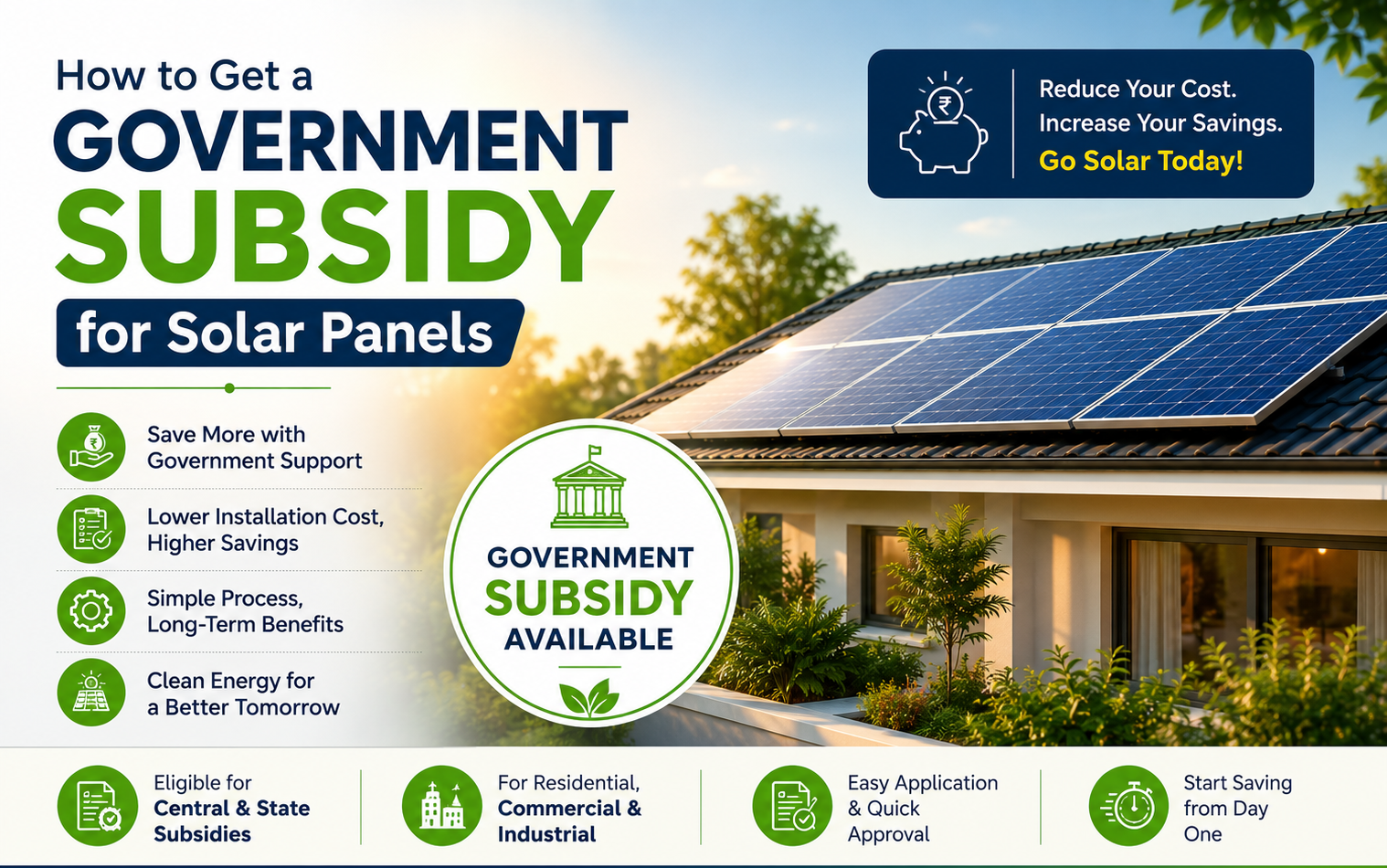
The PM Surya Ghar subsidy pays up to ₹78,000 for a home, but only if a few conditions are met from the start. Most can't be fixed afterwards.
Panels that aren't DCR
A subsidised system must use panels made in India with Indian-made cells. Since 1 June 2026, the panel model must also be on the approved list with cells from the approved cell list. With any other panels there is no subsidy, and the only fix is replacing them.
A vendor who isn't registered
Only vendors registered on the national portal for your DISCOM can file the installation report the subsidy depends on. Check the vendor on the portal before you pay anything.
Details that don't match
Your name has to be spelt the same on your Aadhaar, your electricity bill and your bank account, and the system can't be bigger than your sanctioned load. Our subsidy guide lists the checks to do before you apply.
5. A structure that's too low or too weak
The structure holds the panels up for 25 years through wind, rain and heat, and it's the part where costs are most often cut.
- Too low, and the panels can't be cleaned easily, run hotter because air can't flow underneath, and take over the terrace. Raise them enough to walk and clean under if you use the terrace.
- Thin or painted steel rusts. Hot-dip galvanised steel lasts.
- It should be fixed firmly enough for strong winds, without breaking the roof's waterproofing.
- The panels should be tilted towards the south, not laid flat, unless your roof makes that impossible.
6. Picking the wrong inverter
The inverter turns the panels' power into the power your home uses, and it's the part most likely to need attention in the system's life.
- Its capacity should suit the panels. One much smaller than the panels wastes power on sunny days.
- Choose a make with service available in your city. A good inverter with no one nearby to repair it is a poor choice.
- An ordinary on-grid inverter switches off during a power cut. If cuts are a problem where you live, you need a hybrid system with batteries. Our guide to on-grid and off-grid systems explains the difference.
- Put it somewhere shaded and ventilated, not in full sun on the roof.
7. Cutting corners on earthing and wiring
This is the part you can't see once the system is up, which is why it gets skipped. It matters for your family's safety and for the equipment.
- Proper earthing, usually with separate earth pits for the panels, the inverter and the lightning arrester.
- A lightning arrester, especially on a tall or exposed building.
- Solar DC cable made to stand up to sun and heat, not ordinary house wiring, run in conduits and properly connected.
- Protection boxes on both the panel side and the house side, with fuses and surge protection.
8. No plan for cleaning
Dust is the most common reason a system makes less than it should, especially in dry months. Before installation, make sure there's a safe way to reach every panel and a water point on the roof. Clean with plain water and a soft brush or mop, early in the morning or in the evening, never with detergent or a hard scrubber.
9. Leaving without the paperwork
When the system is commissioned, collect these and keep them together. Every warranty claim and every subsidy query will need them.
- Warranty papers for the panels and the inverter, with their serial numbers
- The commissioning certificate and the net-metering agreement
- The final invoice, showing the panel and inverter models
- The vendor's contact for service during the five years of maintenance
10. Waiting too long
Waiting doesn't make solar cheaper either: every month without it is a month of the old bill. If you've decided, it's safer to start now than to count on an extension.
How we help
Most of these mistakes come from rushing. We take you through each step in order, so nothing is left to chance.
- A free site survey before we quote, covering shade, roof condition and where everything will go
- A system sized from a year of your bills and your sanctioned load
- A quote that names every part: panels, inverter, structure, earthing and cables
- Installation by our own team, help with the subsidy, and a full set of papers at handover
Already have a quote?
Send it to us. We'll go through it line by line and tell you plainly what's included, what's missing and whether the price is fair.
Questions people ask
How long does installation take?
The installation itself usually takes one or two days for a home system. The approvals, the DISCOM inspection and the net meter take longer, and how long depends on your DISCOM.
Will fixing the structure make my roof leak?
Not if it is done properly. The structure should be fixed with anchors that are sealed, or on concrete blocks that sit on the roof, without breaking the waterproofing. Ask your installer which method they will use before work starts.
Is a cheaper quote always worse?
Not always, but it usually leaves something out. Compare quotes line by line: the panel model, the inverter, the structure, the earthing and the cables. If two quotes include the same things, the cheaper one may simply be the better deal.
Can I add more panels later?
Usually, as long as your sanctioned load allows it. Adding panels later is easier if you plan for it now, with an inverter that has room to spare and space left on the structure. The new panels should match the old ones or go on a separate inverter input.
I live in a flat. Can I install solar myself?
The roof of a block of flats belongs to everyone, so you need the society's agreement. Often the better route is for the society to install a system for the common areas, which has its own subsidy. Our subsidy guide explains how that works.
I rent my home. Can I still go solar?
Only with the owner's written consent, and the subsidy goes to the person whose name is on the electricity bill. If the connection is in the owner's name, they would need to apply.